Depression Support in the Workplace
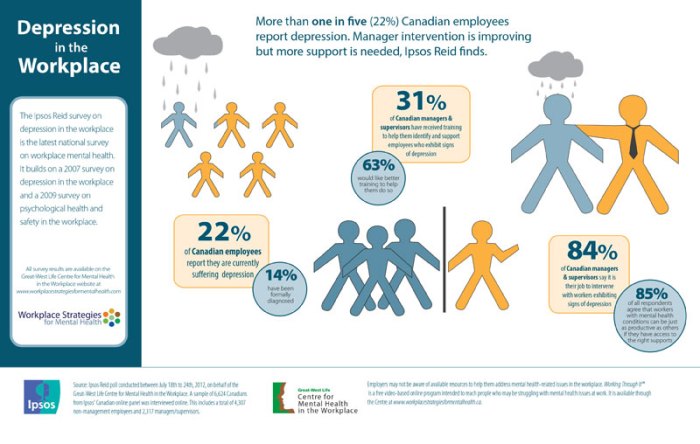
Depression support in the workplace is crucial for fostering a healthy and productive environment. Untreated depression significantly impacts employee well-being, productivity, and overall workplace dynamics. This exploration delves into understanding the signs of depression, effective stress management strategies, available resources, and the importance of creating a supportive workplace culture that prioritizes mental health. We will examine practical techniques for building resilience, improving sleep hygiene, and implementing successful workplace mental health initiatives.
From identifying workplace triggers that exacerbate depressive symptoms to providing a directory of internal and external resources, this comprehensive guide aims to equip both employers and employees with the knowledge and tools necessary to navigate mental health challenges effectively. We will also explore the connection between addiction, sleep, and mental health, along with the significance of self-care and personal growth strategies.
Overcoming Addictions and Their Impact on Mental Health: Depression Support In The Workplace

Addiction and depression frequently coexist, creating a complex and challenging situation for individuals. The link between the two is multifaceted, with addiction often exacerbating existing depression and, conversely, depression increasing the vulnerability to developing an addiction. This cyclical relationship can significantly impact an individual’s overall well-being, affecting their work performance, personal relationships, and physical health. Understanding this connection is crucial for effective intervention and support.The impact of addiction on mental health is profound.
Substance abuse can trigger or worsen depressive symptoms, leading to feelings of hopelessness, worthlessness, and loss of interest in activities once enjoyed. Similarly, individuals struggling with depression may turn to substances as a form of self-medication, attempting to alleviate their negative emotions, albeit temporarily and often with devastating long-term consequences. This self-medication cycle can lead to dependence and further complicate the existing mental health condition.
Resources Available to Employees Struggling with Addiction
Our company recognizes the challenges associated with addiction and offers a range of confidential resources to support employees seeking help. These resources include access to Employee Assistance Programs (EAPs), which provide confidential counseling, referral services, and support groups. EAPs can connect employees with qualified professionals specializing in addiction treatment, helping them navigate the complexities of recovery. Additionally, the company may offer health insurance plans that cover substance abuse treatment, including inpatient and outpatient programs, medication-assisted treatment, and therapy.
Information about these resources, including contact details and eligibility criteria, is available through the Human Resources department.
The Importance of Seeking Professional Help for Addiction
Seeking professional help for addiction is vital for successful recovery. Addiction is a complex medical condition, not a moral failing, and requires specialized treatment. Professional help provides access to evidence-based therapies, such as cognitive behavioral therapy (CBT) and motivational interviewing, which address the underlying causes of addiction and help individuals develop coping mechanisms to manage cravings and triggers.
Furthermore, medical professionals can assess the individual’s physical and mental health, manage withdrawal symptoms, and prescribe medication if necessary. Early intervention is key; delaying treatment can worsen the addiction and its impact on mental health.
Warning Signs of Substance Abuse in the Workplace
It is important to be aware of potential warning signs of substance abuse in the workplace. While observing these signs doesn’t constitute a diagnosis, they can indicate a need for concern and support. These signs may include:
- Changes in work performance, such as decreased productivity, increased absenteeism, or missed deadlines.
- Changes in behavior, such as increased irritability, mood swings, or unusual secrecy.
- Physical changes, including unexplained weight loss or gain, changes in appearance, or frequent illness.
- Problems with concentration or memory.
- Unusual behavior, such as slurred speech, tremors, or impaired coordination.
- Increased borrowing of money or financial difficulties.
- Withdrawal from social activities or colleagues.
Personal Growth and Self-Care Strategies
Prioritizing personal growth and self-care is crucial for maintaining mental well-being, especially in demanding work environments. Neglecting these aspects can lead to burnout and decreased productivity. Implementing effective self-care strategies can significantly improve overall mental health and contribute to a more balanced and fulfilling life, both professionally and personally. This section will explore several key strategies to promote mental well-being and resilience.Self-care practices are essential for mitigating workplace stress and promoting a healthy work-life balance.
These practices help individuals recharge, reduce stress levels, and improve their overall sense of well-being. Consistent engagement in these practices contributes to improved mental and physical health, ultimately boosting productivity and job satisfaction.
Self-Care Practices Promoting Mental Well-being, Depression support in the workplace
Prioritizing self-care involves actively engaging in activities that nourish your mind, body, and spirit. A holistic approach is key to experiencing lasting benefits. Regular engagement in these practices contributes to a more resilient and balanced life.
- Mindfulness and Meditation: Practicing mindfulness, even for a few minutes daily, can help reduce stress and improve focus. Meditation techniques involve focusing on the present moment, calming the mind, and reducing anxious thoughts.
- Physical Exercise: Regular physical activity releases endorphins, which have mood-boosting effects. Aim for at least 30 minutes of moderate-intensity exercise most days of the week. This could include brisk walking, jogging, swimming, or cycling.
- Sufficient Sleep: Getting 7-9 hours of quality sleep each night is crucial for physical and mental restoration. A consistent sleep schedule and a relaxing bedtime routine can significantly improve sleep quality.
- Healthy Diet: Nourishing your body with a balanced diet rich in fruits, vegetables, and whole grains provides the necessary nutrients for optimal brain function and overall well-being. Limit processed foods, sugary drinks, and excessive caffeine.
- Social Connection: Maintaining strong social connections with friends, family, and colleagues provides emotional support and reduces feelings of isolation. Make time for meaningful interactions and social activities.
Setting Boundaries in the Workplace
Establishing clear boundaries is essential for protecting your mental health and preventing burnout. This involves defining limits on your work responsibilities, availability, and engagement to prevent overwork and maintain a healthy work-life balance. Effective boundary setting helps prevent stress and improves overall well-being.Setting boundaries can involve actions such as: declining additional tasks when already overloaded, setting specific work hours and adhering to them, and communicating effectively about your limits to supervisors and colleagues.
It’s important to remember that saying “no” is a form of self-care. By setting boundaries, you’re prioritizing your mental and emotional health, leading to improved productivity and job satisfaction.
Prioritizing Self-Care in a Busy Work Environment
Integrating self-care into a busy work schedule requires planning and commitment. It’s not about finding large blocks of time, but rather incorporating small, manageable practices throughout the day. Small, consistent efforts can cumulatively contribute to significant improvements in well-being.Strategies include scheduling short breaks for mindful breathing exercises, utilizing lunch breaks for a walk or a quick meditation session, and planning self-care activities for evenings or weekends.
Prioritizing sleep and maintaining a healthy diet are also crucial, even during busy periods. Remember that self-care isn’t selfish; it’s essential for sustained productivity and overall well-being.
Benefits of Engaging in Hobbies and Activities Outside of Work
Engaging in hobbies and activities outside of work provides a much-needed break from the pressures of the workplace and fosters personal growth. These activities offer opportunities for relaxation, stress reduction, and the development of new skills and interests. Participating in hobbies can enhance creativity, boost self-esteem, and provide a sense of accomplishment.Examples of beneficial activities include: pursuing creative pursuits like painting or writing, joining a sports team or fitness class, volunteering in the community, or spending time in nature.
These activities offer a sense of escape and rejuvenation, allowing individuals to return to work feeling refreshed and more focused. The benefits extend beyond stress reduction; they contribute to a more well-rounded and fulfilling life.
Creating a supportive and understanding work environment regarding mental health is not merely a matter of compassion; it’s a strategic imperative for success. By proactively addressing depression and promoting mental well-being, organizations can cultivate a culture of resilience, increase productivity, and reduce employee turnover. Implementing comprehensive mental health initiatives, providing accessible resources, and fostering open communication are key steps in building a thriving and inclusive workplace where every employee feels valued and supported.
FAQ Resource
What are some early warning signs of depression in the workplace?
Reduced productivity, increased absenteeism, withdrawn behavior, changes in personality, irritability, difficulty concentrating, and decreased job satisfaction are potential indicators.
How can managers support employees struggling with depression without overstepping boundaries?
Managers should offer support and understanding, encourage seeking professional help, adjust workloads if needed, and maintain open communication, respecting employee privacy and confidentiality.
What is the difference between CBT and DBT therapy?
CBT (Cognitive Behavioral Therapy) focuses on changing thought patterns and behaviors. DBT (Dialectical Behavior Therapy) emphasizes emotional regulation and distress tolerance, often used for individuals with intense emotions.
Are there legal implications for employers regarding employee mental health?
Yes, depending on the jurisdiction, employers may have legal obligations to provide reasonable accommodations for employees with mental health conditions under disability discrimination laws. Specific laws vary by location.


