Mindfulness Exercises for Beginners
Mindfulness exercises for beginners offer a gentle pathway to inner peace and improved well-being. This guide explores simple yet powerful techniques to cultivate mindfulness, helping you manage stress, enhance focus, and foster a greater sense of self-awareness. We’ll delve into practical exercises, address common challenges, and provide resources to support your journey toward a more mindful life.
From understanding the core principles of mindfulness to integrating these practices into your daily routine, we’ll cover a range of topics designed to make mindfulness accessible and beneficial for everyone. We will also explore how mindfulness can positively impact various aspects of your life, from managing stress and anxiety to improving sleep quality and fostering resilience. This comprehensive guide aims to equip you with the tools and knowledge to embark on your personal mindfulness journey with confidence.
Introduction to Mindfulness for Beginners: Mindfulness Exercises For Beginners
Mindfulness, at its core, is the practice of paying attention to the present moment without judgment. It’s about cultivating awareness of your thoughts, feelings, bodily sensations, and the world around you, all without getting swept away by them. For beginners, this can feel like a simple act of observation, a gentle shift in perspective that can yield surprisingly profound benefits.
These benefits include reduced stress, improved focus, increased self-awareness, and a greater sense of calm and well-being.Mindfulness isn’t a new concept; its roots stretch back thousands of years to ancient meditative practices in Buddhism and other Eastern traditions. While its origins are ancient, its modern popularity has surged in recent decades, driven by scientific research demonstrating its effectiveness in managing various mental and physical health challenges.
The secular application of mindfulness, stripped of its religious connotations, has made it accessible to a wider audience. Today, mindfulness techniques are integrated into various fields, from healthcare and education to the workplace, reflecting its growing recognition as a valuable tool for personal growth and well-being.
Core Principles of Mindfulness
Mindfulness rests on several key principles. First, it emphasizes the importance of present moment awareness. This means focusing your attention on what’s happening right now, rather than dwelling on the past or worrying about the future. Second, mindfulness encourages a non-judgmental attitude. This means observing your thoughts and feelings without labeling them as “good” or “bad,” simply acknowledging their presence.
Third, it involves cultivating acceptance. This means recognizing and accepting your experiences as they are, without trying to change them. Finally, it promotes self-compassion. This involves treating yourself with kindness and understanding, especially when you notice yourself getting caught up in negative thoughts or emotions.
Benefits of Mindfulness for Beginners
Even for those just starting out, the benefits of mindfulness can be significant. Reduced stress and anxiety are often among the first noticeable effects. By focusing on the present, you create space between yourself and stressful thoughts and emotions, reducing their power over you. Improved focus and concentration are also common experiences, as mindfulness trains your mind to resist distractions and stay present.
Furthermore, increased self-awareness allows you to better understand your own thoughts, feelings, and behaviors, leading to greater self-acceptance and emotional regulation.
Creating a Mindful Environment
Establishing a conducive environment is crucial for successful mindfulness practice. This involves finding a quiet space where you feel comfortable and relaxed. Minimizing distractions, such as turning off electronic devices or finding a time when you’re less likely to be interrupted, is important. Consider incorporating elements that promote relaxation, such as soft lighting, calming music, or comfortable seating.
Even small adjustments, like diffusing essential oils or using a weighted blanket, can enhance the overall experience and create a more peaceful atmosphere for your practice.
Basic Mindfulness Exercises
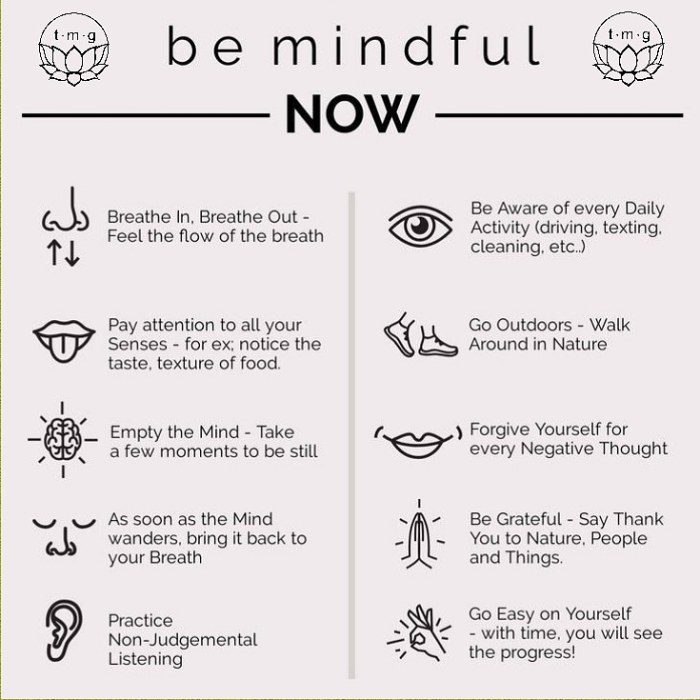
Beginning your mindfulness journey involves cultivating a gentle awareness of the present moment. This isn’t about emptying your mind, but rather about observing your thoughts and feelings without judgment. The following exercises provide a starting point for developing this skill.
These simple exercises can be practiced anywhere, anytime, and require no special equipment. Remember to be patient with yourself; the key is consistency, not perfection.
Three Simple Mindfulness Exercises
The following table Artikels three foundational mindfulness exercises, detailing their methods, duration, and potential benefits. Regular practice of these exercises can significantly enhance your overall well-being.
| Exercise Name | Description | Duration | Benefits |
|---|---|---|---|
| Mindful Breathing | Find a comfortable position. Gently bring your attention to your breath, noticing the sensation of the air entering and leaving your nostrils, or the rise and fall of your abdomen. When your mind wanders (and it will!), gently guide your attention back to your breath. | 5-10 minutes | Reduces stress and anxiety, improves focus and concentration, promotes relaxation. |
| Body Scan Meditation | Lie down comfortably. Bring your attention to your toes, noticing any sensations – tingling, warmth, pressure. Slowly move your awareness up your body, paying attention to each part – feet, ankles, calves, knees, and so on, all the way to the top of your head. Notice sensations without judgment. | 10-20 minutes | Increases body awareness, reduces muscle tension, improves self-regulation. |
| Mindful Walking | Walk at a slow, comfortable pace. Pay attention to the feeling of your feet making contact with the ground, the movement of your legs, and the rhythm of your steps. Notice the sights, sounds, and smells around you without getting caught up in thought. | 5-10 minutes | Enhances present moment awareness, reduces stress, improves body awareness, and can be easily incorporated into daily life. |
The Importance of Consistency in Practicing Mindfulness
Consistency is crucial for reaping the benefits of mindfulness. Just like any skill, mindfulness requires regular practice to develop and strengthen. Even short, regular sessions are more effective than infrequent, longer ones. Think of it like exercising a muscle; the more you use it, the stronger it becomes. Aim for daily practice, even if it’s just for a few minutes.
Over time, you’ll notice an increase in your ability to stay present and focused.
Incorporating Mindfulness into Daily Routines
Mindfulness doesn’t require setting aside large blocks of time. It can be seamlessly integrated into your daily activities. Here are some examples:
Instead of rushing through your morning routine, take a few moments to savor your coffee or tea, paying attention to its aroma and taste. While eating, focus on the textures and flavors of your food. During your commute, notice the sights and sounds around you, even if it’s just for a minute or two. Before responding to an email, take a deep breath and center yourself.
These small acts of mindful attention accumulate over time, leading to a more peaceful and present way of life. Consider using a mindfulness app or setting reminders on your phone to encourage regular practice.
Overcoming Common Challenges
Beginning a mindfulness practice can feel challenging, even daunting. Many beginners experience obstacles that can make it difficult to stick with their new routine. Understanding these common hurdles and developing strategies to overcome them is crucial for building a sustainable mindfulness practice. This section will explore some typical difficulties and offer practical solutions to help you navigate them.It’s important to remember that these challenges are completely normal.
The mind is naturally restless and prone to wandering. Don’t judge yourself harshly if you find your attention drifting; instead, view these experiences as opportunities for learning and growth within the mindfulness process.
Racing Thoughts and a Restless Mind
A common obstacle is the constant stream of thoughts that race through the mind during meditation or mindfulness exercises. This mental chatter can feel overwhelming and frustrating, leading to feelings of impatience and a desire to give up. However, this experience is not a sign of failure, but rather a natural characteristic of the human mind. The key is to observe these thoughts without judgment, acknowledging their presence without getting carried away by them.
Instead of fighting the thoughts, gently guide your attention back to your chosen focus – your breath, body sensations, or sounds. Techniques like focusing on a mantra or visualization can also help to anchor your attention.
Difficulty Focusing and Maintaining Attention
Many beginners struggle with maintaining focus during mindfulness exercises. The mind may wander frequently, jumping from one thought to another. This is entirely expected, as our minds are not naturally trained to stay focused for extended periods. Gradually increasing the duration of your practice sessions is key. Start with short sessions (even just five minutes) and progressively increase the time as your ability to focus improves.
You can also incorporate mindfulness into your daily life through activities such as mindful walking or eating, which can help strengthen your attention span in less formal settings. Regular practice, even in short bursts, is more effective than infrequent long sessions.
Staying Motivated and Consistent
Maintaining a consistent mindfulness practice requires dedication and motivation. Life’s demands can easily derail even the most well-intentioned plans. To stay motivated, it’s helpful to set realistic goals, starting with short, achievable sessions. Celebrate small victories and acknowledge your progress, no matter how small. Finding a mindfulness buddy or joining a group can provide support and accountability.
Remember to integrate mindfulness into your daily life, making it a natural part of your routine rather than an additional chore. Consider scheduling your mindfulness practice like any other important appointment.
The Importance of Patience and Self-Compassion
Patience and self-compassion are essential components of a successful mindfulness journey. Mindfulness is a skill that develops over time, and progress isn’t always linear. There will be days when you find it easier to focus, and days when your mind feels particularly restless. Be kind to yourself during these times. Avoid self-criticism and instead approach your practice with gentle understanding.
Remember that the process of learning mindfulness is a journey of self-discovery and acceptance, not a race to achieve perfection. Cultivating self-compassion allows you to approach your practice with greater ease and persistence.
Mindfulness and Stress/Anxiety Management
Mindfulness, the practice of paying attention to the present moment without judgment, offers a powerful approach to managing stress and anxiety. By cultivating awareness of our thoughts, feelings, and bodily sensations, we can interrupt the cycle of negative thinking and emotional reactivity that often fuels stress and anxiety. This increased self-awareness allows us to respond to challenging situations with greater clarity and composure.Mindfulness techniques directly counteract the physiological and psychological responses associated with stress and anxiety.
The practice encourages a shift from the constant worry and anticipation of future threats (a hallmark of anxiety) to a grounded presence in the here and now. This shift helps to regulate the body’s stress response, reducing the production of stress hormones like cortisol and promoting a sense of calm and control.
Mindfulness Techniques for Anxiety Symptom Management
Mindfulness meditation, a core practice in mindfulness-based interventions, involves focusing attention on a chosen object—such as the breath, bodily sensations, or sounds—and gently redirecting attention when the mind wanders. This consistent practice strengthens the ability to observe thoughts and feelings without judgment, reducing their power to overwhelm. Mindful breathing exercises, in particular, can quickly calm the nervous system by slowing the heart rate and promoting relaxation.
Body scans, another common technique, involve systematically bringing awareness to different parts of the body, noticing any sensations without trying to change them. This can help to identify and release physical tension often associated with anxiety.
A Step-by-Step Guide to Using Mindfulness During Stressful Situations
Stressful situations inevitably arise in daily life. The following steps Artikel a practical approach to using mindfulness to navigate these challenges effectively.
- Pause and Acknowledge: When faced with a stressful situation, take a moment to pause before reacting. Acknowledge the stress you’re experiencing without judgment. Simply observe the sensations in your body and the thoughts running through your mind.
- Focus on the Breath: Gently bring your attention to your breath. Notice the sensation of the air entering and leaving your body. If your mind wanders, gently redirect your attention back to your breath. This simple act can help to ground you in the present moment and reduce feelings of overwhelm.
- Observe Without Judgment: Observe your thoughts and feelings without trying to change or suppress them. Notice the sensations in your body—tension in your shoulders, tightness in your chest, etc. Recognize these as temporary experiences, rather than permanent realities.
- Expand Your Awareness: Gradually expand your awareness to include your surroundings. Notice the sounds, sights, and smells around you. This helps to broaden your perspective and reduce the intensity of your focus on the stressful situation.
- Respond, Don’t React: Once you’ve calmed yourself, take time to consider your response. Approach the situation with greater clarity and intention, rather than reacting impulsively from a place of stress and anxiety.
For example, imagine you’re facing a difficult conversation with a colleague. Instead of immediately reacting with defensiveness or anger, you can use this mindfulness approach to pause, breathe, observe your feelings, and then respond thoughtfully and calmly. This mindful approach can transform a potentially explosive situation into a more constructive dialogue.
Mindfulness and Depression Support
Mindfulness practices offer a valuable approach to managing depressive symptoms. By cultivating present moment awareness, individuals can begin to interrupt negative thought patterns and emotional cycles that contribute to depression. This increased self-awareness allows for a greater capacity to respond to challenging emotions rather than being overwhelmed by them.Mindfulness doesn’t replace professional treatment, but it can be a powerful complementary tool in managing depression and improving overall well-being.
It encourages a gentler, more compassionate relationship with oneself, fostering resilience and a sense of self-acceptance. This can be especially beneficial during periods of low mood and feelings of hopelessness.
Mindfulness Techniques for Depression
Mindful breathing exercises, body scans, and mindful movement practices can all be effective in reducing depressive symptoms. Mindful breathing, for instance, involves focusing on the sensation of the breath entering and leaving the body, anchoring oneself in the present moment and gently redirecting attention away from ruminative thoughts. Body scans involve systematically bringing awareness to different parts of the body, noticing sensations without judgment.
Mindful movement, such as yoga or tai chi, combines physical activity with mindful awareness, promoting both physical and mental well-being. Regular practice of these techniques can help to regulate the nervous system, reducing feelings of anxiety and promoting a sense of calm.
Resources and Support Options for Depression
Finding the right support is crucial when dealing with depression. A multi-faceted approach often yields the best results.
Below are some helpful resources:
- Therapy: Cognitive Behavioral Therapy (CBT) and other evidence-based therapies are highly effective in treating depression. A therapist can provide guidance, coping strategies, and support tailored to individual needs.
- Support Groups: Connecting with others who understand the challenges of depression can provide a sense of community and validation. Many online and in-person support groups are available.
- Medication: In some cases, medication can be a helpful addition to therapy and mindfulness practices. A psychiatrist or doctor can assess the need for medication and monitor its effectiveness.
- Mindfulness Apps: Several apps offer guided meditations and mindfulness exercises, providing readily accessible support anytime, anywhere. Examples include Headspace and Calm.
- Online Resources: Reputable organizations like the National Institute of Mental Health (NIMH) and the National Alliance on Mental Illness (NAMI) offer extensive information, resources, and support for individuals with depression and their loved ones.
Seeking Professional Help for Depression
It is vital to remember that seeking professional help is a sign of strength, not weakness. Depression is a serious condition that can significantly impact one’s life. A mental health professional can provide a proper diagnosis, develop a personalized treatment plan, and monitor progress. Ignoring the symptoms of depression can lead to worsening of the condition and potential complications.
Early intervention is key to improving outcomes and regaining a sense of well-being. Don’t hesitate to reach out for support if you are struggling. There is help available, and recovery is possible.
Mindfulness Practices for Different Aspects of Life
Mindfulness, the practice of paying attention to the present moment without judgment, offers a powerful tool for enhancing various aspects of our lives. By cultivating awareness of our thoughts, feelings, and sensations, we can improve our well-being and navigate daily challenges more effectively. This section explores how mindfulness can be applied to improve sleep, enhance workplace productivity, and build resilience.
Mindfulness Practices for Improving Sleep Quality
Improving sleep quality often involves addressing the anxieties and racing thoughts that prevent us from relaxing before bed. Mindfulness techniques can help quiet the mind and promote relaxation, leading to better sleep. A simple practice involves lying down comfortably, closing your eyes, and focusing on your breath. Notice the sensation of the air entering and leaving your nostrils, the rise and fall of your chest or abdomen.
When your mind wanders (and it will!), gently redirect your attention back to your breath. Another helpful technique is a body scan meditation, where you systematically bring awareness to different parts of your body, noticing any sensations without judgment. This can help release physical tension that may be contributing to sleeplessness. Regular practice of these techniques, even for just a few minutes before bed, can significantly improve sleep quality over time.
Incorporating Mindfulness into the Workplace to Enhance Productivity and Well-being
Mindfulness can be a valuable asset in the workplace, fostering a more focused, productive, and less stressful environment. Integrating mindfulness practices into your workday doesn’t require significant time commitments; even short, regular sessions can yield positive results.
- Mindful Breaks: Schedule short breaks throughout the day to practice mindfulness. This could involve a few minutes of deep breathing, a short body scan, or simply observing your surroundings with a non-judgmental attitude.
- Mindful Movement: Incorporate mindful movement into your workday, such as stretching or taking a mindful walk during your lunch break. Paying attention to the sensations in your body during these activities can help reduce stress and improve focus.
- Mindful Communication: Practice mindful communication by paying close attention to both your own words and the words of others. This promotes clearer understanding and reduces misunderstandings, leading to improved teamwork and collaboration.
- Mindful Task Completion: Approach each task with focused attention, noticing your thoughts and feelings without judgment. This can enhance concentration and efficiency, reducing the likelihood of errors.
- Mindful Email Management: Instead of constantly checking emails, schedule specific times for email management. When you do check your emails, approach it mindfully, responding thoughtfully and avoiding impulsive reactions.
Mindfulness and Building Resilience
Resilience, the ability to bounce back from adversity, is crucial for navigating life’s inevitable challenges. Mindfulness plays a significant role in building resilience by fostering self-awareness, emotional regulation, and a more balanced perspective. By cultivating awareness of our thoughts and feelings in the present moment, we can better understand our emotional responses to challenging situations. This self-awareness allows us to choose our reactions rather than reacting impulsively.
For example, when faced with a stressful situation, a mindful approach involves acknowledging the stress without judgment, recognizing the physical sensations associated with it (e.g., increased heart rate, tension in the shoulders), and then choosing a calm and measured response rather than reacting with anger or anxiety. This process of mindful observation and intentional response builds emotional resilience over time, enabling us to cope more effectively with adversity.
Building a Sustainable Mindfulness Practice
Establishing a consistent mindfulness practice isn’t about achieving perfection; it’s about cultivating a gentle, ongoing relationship with your inner self. Building a sustainable routine requires a personalized approach, recognizing that what works for one person may not work for another. Consistency, not intensity, is key to reaping the long-term benefits of mindfulness.A sustainable mindfulness practice hinges on creating a personalized plan that integrates seamlessly into your life.
This involves understanding your own rhythms, preferences, and potential obstacles. It’s about building a routine that feels supportive and encouraging, rather than a burden. Flexibility is vital; life throws curveballs, and your mindfulness practice should be able to adapt.
Creating a Personalized Mindfulness Plan
Developing a personal mindfulness plan involves several key steps. First, consider your daily schedule and identify realistic time slots for practice. Even five minutes a day can be profoundly effective. Next, choose mindfulness exercises that resonate with you. Experiment with different techniques—guided meditations, body scans, mindful breathing, or mindful walking—to discover what feels most engaging and beneficial.
Finally, write down your plan, including specific times and activities, and track your progress. This simple act of planning and monitoring can significantly enhance commitment. For example, someone with a busy morning might dedicate five minutes to mindful breathing before their shower, while someone with a more flexible schedule might incorporate a longer meditation session in the evening.
The Importance of Self-Reflection and Adjustment
Regular self-reflection is crucial for refining your mindfulness practice. Pay attention to how different techniques make you feel. Are you finding certain practices more challenging or rewarding than others? Are you noticing any shifts in your mood, stress levels, or overall well-being? This ongoing evaluation allows you to adjust your plan as needed.
For instance, if you find guided meditations too distracting, you might shift to mindful walking or focus on simple breathing exercises. If you’re feeling overwhelmed, you might shorten your practice sessions or choose less demanding techniques. The goal is to create a practice that is both effective and enjoyable, ensuring long-term adherence.
Maintaining Motivation and Avoiding Burnout
Maintaining motivation in any long-term endeavor requires consistent effort and self-compassion. Set realistic goals, starting small and gradually increasing the duration or intensity of your practice. Celebrate your successes, no matter how small, and acknowledge that setbacks are a normal part of the process. Remember that mindfulness is not a performance; it’s a journey. To prevent burnout, vary your practices, incorporating different techniques to keep things interesting and engaging.
If you find yourself feeling overwhelmed or resistant to your practice, take a break and return when you feel ready. Consider incorporating mindfulness into everyday activities, such as eating or walking, to integrate it more naturally into your life. Joining a mindfulness group or working with a mindfulness teacher can also provide valuable support and encouragement.
Additional Resources and Support
Embarking on a mindfulness journey is a personal commitment, and accessing additional resources and support can significantly enhance your experience and progress. Understanding the various avenues available for mental health assistance, including professional guidance and community support, is crucial for building a sustainable and effective mindfulness practice. This section Artikels several key resources and explains their roles in supporting your mental well-being.
Mental Health Advocacy Organizations and Their Roles
Numerous organizations dedicate themselves to advocating for improved mental healthcare and providing crucial support to individuals and families affected by mental health challenges. These organizations often offer a range of services, including information and education, support groups, advocacy for policy changes, and referrals to mental health professionals. Examples include the National Alliance on Mental Illness (NAMI) in the United States, which provides support, education, and advocacy for individuals and families affected by mental illness, and the Mental Health Foundation in the United Kingdom, which focuses on prevention and early intervention strategies.
These organizations play a vital role in raising awareness, reducing stigma, and improving access to quality mental health services. Their websites and resources provide invaluable information, support networks, and connections to local services.
Therapy and Counseling Options for Mental Health Support, Mindfulness exercises for beginners
Several therapy and counseling approaches can effectively address various mental health concerns. Cognitive Behavioral Therapy (CBT) helps individuals identify and modify negative thought patterns and behaviors. Acceptance and Commitment Therapy (ACT) focuses on accepting difficult thoughts and feelings while committing to valued actions. Dialectical Behavior Therapy (DBT) is particularly helpful for individuals struggling with intense emotions and self-harm behaviors.
Other approaches include psychodynamic therapy, which explores unconscious patterns and past experiences, and humanistic therapy, which emphasizes personal growth and self-acceptance. The choice of therapy depends on individual needs and preferences, and consultation with a mental health professional is recommended to determine the most suitable approach.
Mindfulness and Addiction Support
Mindfulness practices can be a powerful tool in supporting recovery from addiction. By cultivating present moment awareness, individuals can develop a greater understanding of their cravings and triggers, enabling them to respond to them with increased self-compassion and less reactivity. Mindfulness-based relapse prevention (MBRP) is a specific approach that integrates mindfulness techniques into traditional relapse prevention strategies. Studies have shown that mindfulness practices can reduce stress, improve emotional regulation, and enhance self-awareness—all crucial components of successful addiction recovery.
Mindfulness can help individuals identify and manage urges, develop healthier coping mechanisms, and build a stronger sense of self-efficacy in maintaining sobriety. It’s important to note that mindfulness is often used as a complementary therapy alongside other evidence-based treatments for addiction.
Illustrative Examples of Mindfulness in Action
Mindfulness isn’t just a theoretical concept; it’s a practical skill that can be applied to various aspects of daily life. The following examples demonstrate how even beginners can utilize mindfulness techniques to navigate challenging situations and enhance their overall well-being. These are not exhaustive, but they provide a good starting point for understanding mindfulness in action.
Mindful Breathing During a Stressful Work Situation
Imagine Sarah, a project manager, facing a tight deadline with a team member falling behind. The pressure is immense; her heart races, her shoulders tense, and a knot forms in her stomach. Instead of reacting impulsively, Sarah remembers her mindful breathing practice. She finds a quiet corner, closes her eyes, and focuses on her breath. She notices the cool air entering her nostrils, the slight expansion of her chest, and the warm air leaving her body.
She feels the gentle rise and fall of her abdomen. She observes the sensations without judgment, letting go of the anxious thoughts swirling in her mind. With each breath, the tension in her shoulders eases slightly. The knot in her stomach loosens. She notices the subtle scent of the lavender hand lotion she applied earlier, a calming aroma that further anchors her in the present moment.
After a few minutes of focused breathing, she feels calmer, clearer, and better equipped to address the situation with her team member constructively.
Guided Visualization for Relaxation and Stress Reduction
A guided visualization exercise can be a powerful tool for relaxation and stress reduction. Imagine yourself lying comfortably, eyes closed. Begin by focusing on your breath, feeling the gentle rhythm of your inhales and exhales. Now, imagine yourself on a tranquil beach. The warm sun gently kisses your skin.
You can feel the soft, warm sand between your toes. The rhythmic sound of the waves crashing on the shore washes over you, a soothing, hypnotic lullaby. You see the sparkling turquoise water, its surface reflecting the brilliant sunlight. The salty air fills your lungs, refreshing and invigorating. You smell the sweet fragrance of tropical flowers carried on the gentle sea breeze.
You feel a sense of peace and tranquility wash over you, erasing the tension and stress from your body. You continue to breathe deeply, basking in the warmth and serenity of this idyllic setting. This visualization allows you to detach from stressful thoughts and immerse yourself in a calming, restorative environment.
Mindful Eating Experience
Consider a mindful eating experience with a simple apple. Before taking a bite, observe the apple’s appearance – its vibrant red skin, the subtle imperfections, its smooth texture. Then, bring the apple to your lips, noticing its cool temperature against your skin. Take a bite, paying attention to the sound of your teeth crunching into the crisp flesh.
Savor the sweet, tart juice that bursts on your tongue. Feel the satisfying texture of the apple as it moves through your mouth. Notice the subtle sweetness and the slight tanginess of the apple. Observe the sensations in your body as you swallow, feeling the satisfaction and nourishment the apple provides. Throughout this process, you are fully present, appreciating the simple pleasure of eating, without distractions or judgment.
You notice not only the physical sensations but also the emotional response: gratitude for the food and the simple pleasure of the moment.
Personal Growth and Self-Care Through Mindfulness
Mindfulness, the practice of paying attention to the present moment without judgment, offers a powerful pathway to personal growth and enhanced self-care. By cultivating a mindful awareness of our thoughts, feelings, and bodily sensations, we can foster greater self-understanding and develop healthier coping mechanisms for navigating life’s challenges. This ultimately leads to improved emotional regulation, increased self-compassion, and a greater sense of overall well-being.Mindfulness fosters self-awareness and emotional regulation by providing a space to observe our internal experiences without getting swept away by them.
Instead of reacting impulsively to emotions, mindfulness allows us to step back and witness them as fleeting events. This creates a sense of detachment that reduces the intensity of emotional responses and enables us to respond more thoughtfully and effectively. For example, instead of immediately lashing out in anger when frustrated, a mindful individual might notice the physical sensations of anger (e.g., a tightening in the chest, increased heart rate) and choose a more constructive response, such as taking a few deep breaths or engaging in a calming activity.
Mindfulness and Self-Compassion
Self-compassion, treating oneself with kindness and understanding, is deeply intertwined with mindfulness. Mindfulness provides the foundation for self-compassion by allowing us to recognize our suffering without judgment. When we are mindful of our shortcomings or failures, we can approach them with empathy and understanding, rather than self-criticism. This fosters a sense of self-acceptance and reduces the negative self-talk that often accompanies personal setbacks.
For instance, instead of berating oneself after making a mistake, a mindful individual might acknowledge the error, offer themselves words of encouragement, and learn from the experience.
Mindfulness and Personal Growth and Well-being
Mindfulness contributes significantly to personal growth and overall well-being by cultivating several key qualities. Increased self-awareness allows for better understanding of personal strengths and weaknesses, enabling more effective goal setting and personal development. Improved emotional regulation leads to more stable moods and reduced stress, improving relationships and overall life satisfaction. The practice of self-compassion promotes resilience and reduces the impact of negative life events, fostering a greater sense of self-acceptance and inner peace.
The cumulative effect of these benefits contributes to a more fulfilling and meaningful life, characterized by greater emotional stability, improved relationships, and a stronger sense of purpose. Studies have shown a correlation between regular mindfulness practice and reduced symptoms of anxiety, depression, and stress, further supporting its role in enhancing overall well-being.
Embarking on a mindfulness journey is a personal and rewarding experience. By consistently practicing even the simplest exercises, you can cultivate a deeper understanding of yourself and your surroundings. Remember that patience and self-compassion are key; progress takes time. With dedication and the support of this guide, you can integrate mindfulness into your daily life, fostering a greater sense of calm, focus, and overall well-being.
Continue exploring resources and refining your practice to create a sustainable and enriching path towards mindful living.
Q&A
How long should I practice mindfulness each day?
Even 5-10 minutes a day can be beneficial. Consistency is more important than duration.
Is mindfulness right for me if I have a busy schedule?
Absolutely! Mindfulness can be incorporated into short moments throughout your day, such as during your commute or while waiting in line.
What if I find my mind wandering during meditation?
It’s perfectly normal! Gently redirect your attention back to your breath or chosen focus point without judgment.
Will mindfulness cure my anxiety or depression?
Mindfulness can be a valuable tool for managing symptoms, but it’s not a replacement for professional help. Consider it a complementary practice.


